National Grid


Introduction to Field Force App & It's purpose
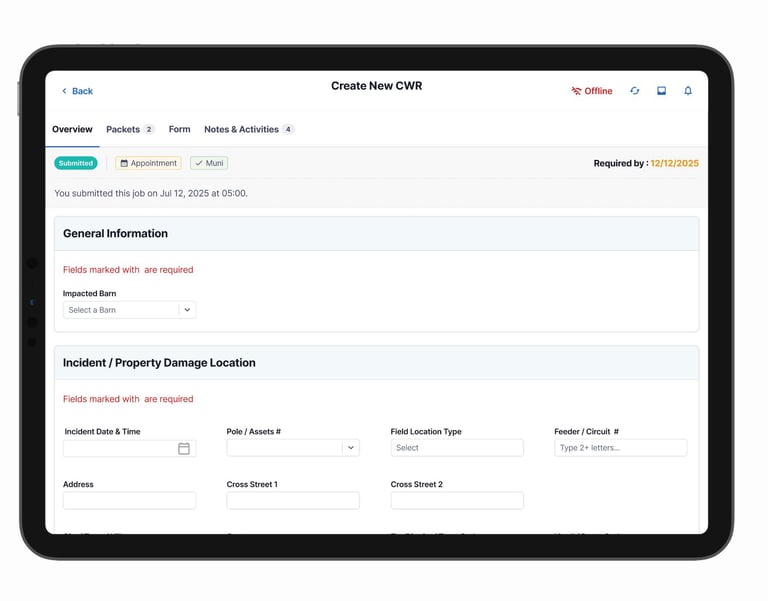
The Field Force App is a transformative internal tool developed by myself and OWM Team at National Grid to enhance the operational efficiency of field crews within the US Electric Distribution Operations. This app was designed to address the challenges faced by field personnel in managing work orders, communication, and data collection, ultimately improving service delivery to customers.
My Role: Product Designer Company: National Grid Year: 2024 - 2025
Challenges Before App
App Features
Manual processes caused delays, miscommunication, and high administrative overhead,reducing productivity and increasing costs.
Real-time data access, digital work orders, automated compliance, and self-assigning tasks streamline field operations and communication.
Executive Summary
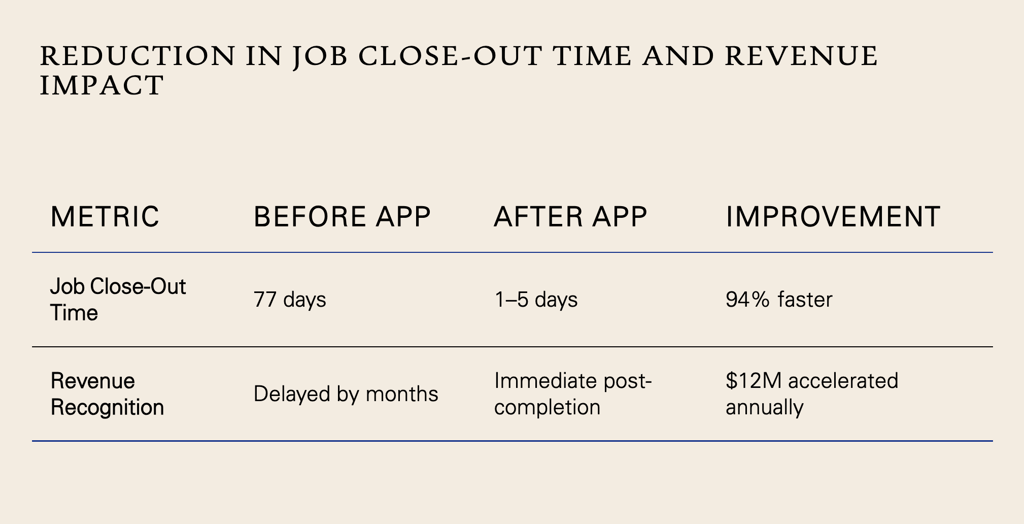
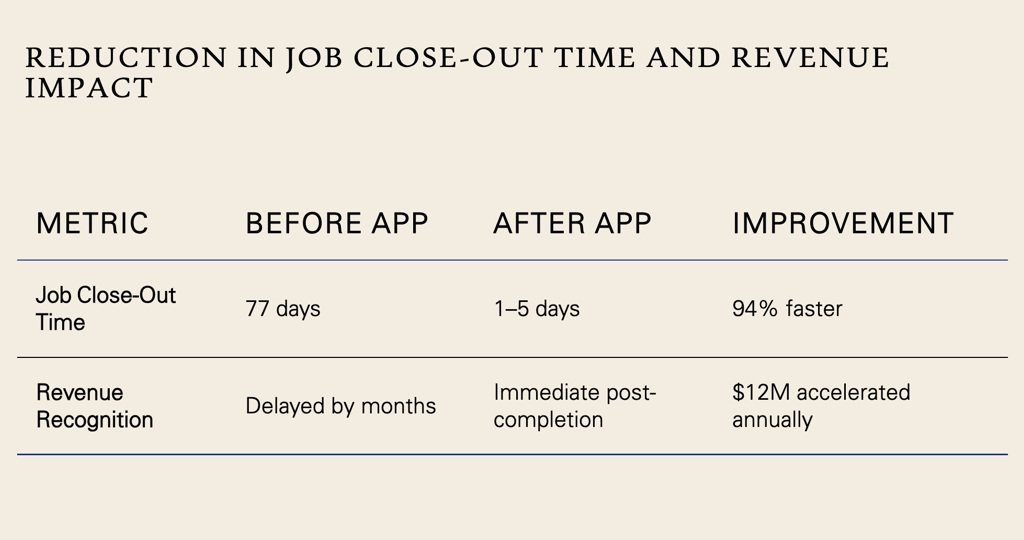
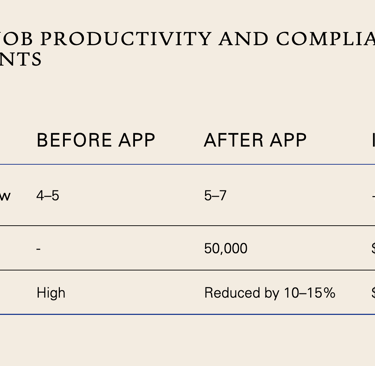
94% faster close-out (77 days ----> 1- 5)
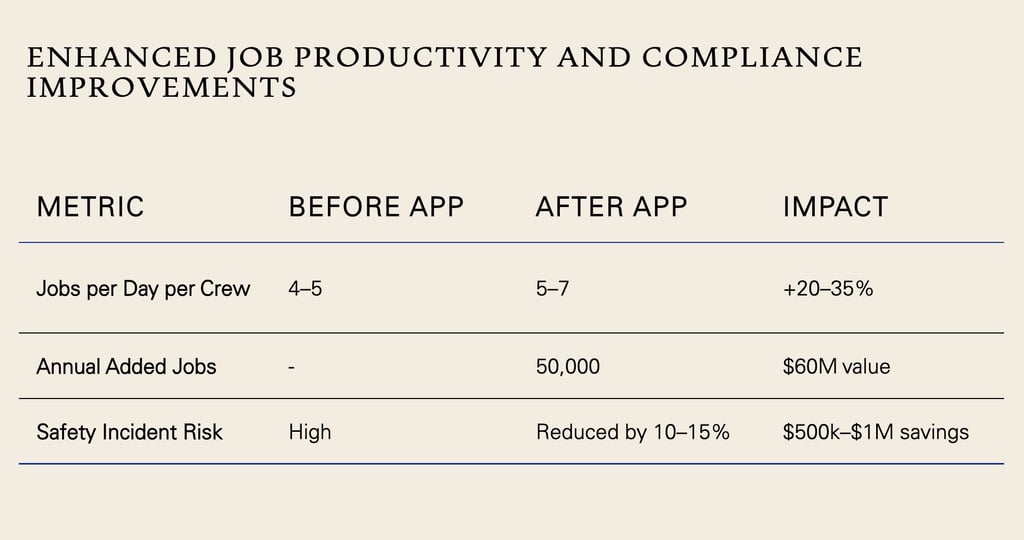
20 - 35% productivity lift, 50K added jobs / Year
$78M - $80M estimated annual value
Research & Key Insights
Ride-alongs, contextual inquiry, artifact analysis, journey mapping
Latency + paperwork = rework & repeats; radio / phone misalignment
Design Principals and Decisions
Glanceable First , Outdoor ready, Safety-by-Design, Offline Resilient
Job Cards with SLA / Location / Safety - One tap On my Way Map / List View
Structured Close-Out, Smart Defaults, Autosave & Confirmations
Measurement & Outcomes
Close-Out: 94% faster -> ~12M revenue acceleratoin
CWR assignment: 50K hours -> ~4.5M
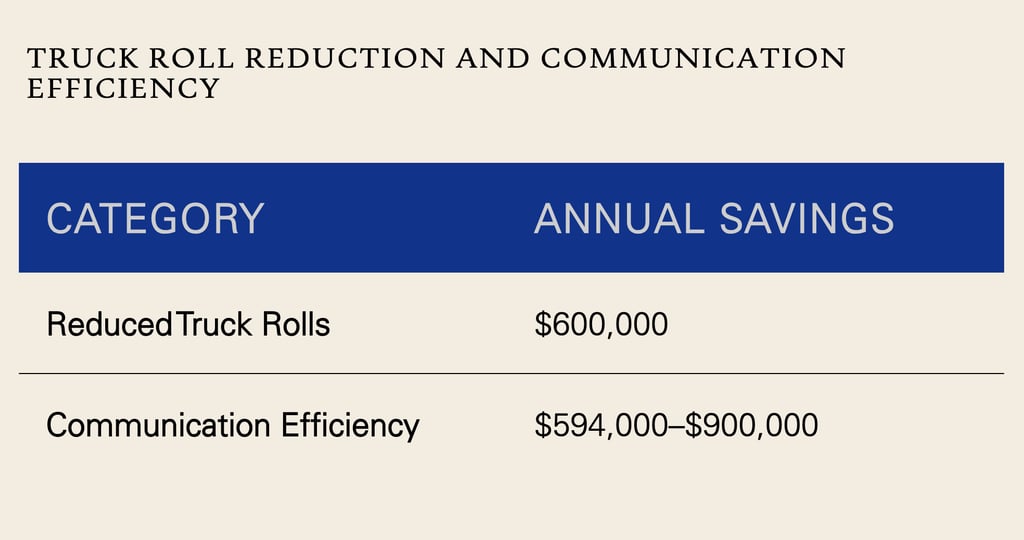
Repeat truck rolls: -10-15% -> ~$600K
Paperwork: -7K-13K hours -> ~$630K-$1.17M + print
Productivity: +20-35% -> ~$60M capacity
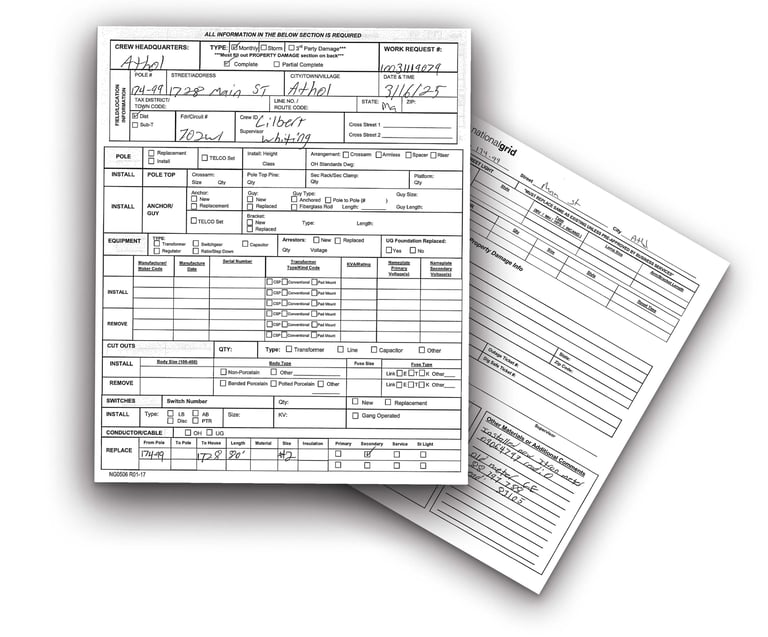
Of Field the Force app Crews at National Grid primarily relied on manual and paper-based processes to complete their work. Here are some key aspects of how they operated:
Limited Access to Real-Time Information: Crews had limited access to real-time data regarding job status, customer information, or updates on outages. This lack of information made it difficult for them to make informed decisions while in the field.
Time-Consuming Processes: Closing out jobs could take a considerable amount of time, with reports indicating that it could take as long as 77 days to complete the paperwork associated with a job. This lengthy process was due to the need for multiple handoffs and approvals.
Communication Challenges: Communication between field crews and dispatchers was primarily conducted via phone or radio, leading to delays and potential miscommunication. Crews often had to report their status and job completions verbally, which could result in errors or omissions.
Manual Work Order Management: Work orders were prioritized and assigned by supervisors, often requiring significant time to shuffle paperwork between departments. Crews had to wait for approvals and updates, which slowed down their ability to respond to jobs efficiently.
Paperwork Packets: Field crews were provided with printed packets containing all the necessary paperwork for their daily tasks. This included work orders, inspection forms, and other documentation that needed to be filled out manually.
Improved transparency, safety compliance, resource optimization, reduced paperwork, and faster job close-outs enhance overall efficiency.
Customer Satisfaction: Faster response times and improved service reliability directly contribute to higher customer satisfaction. By efficiently managing work requests and minimizing outages, National Grid can enhance its reputation and customer trust.
Data-Driven Insights: CWR collects valuable data on work requests, completion times, and crew performance. This data can be analyzed to identify trends, optimize resource allocation, and improve future planning and operational strategies.
Enhanced Safety and Compliance: The app can incorporate safety checks and compliance requirements directly into the workflow, ensuring that crews adhere to safety protocols while on the job. This integration helps in reducing the risk of accidents and enhances the overall safety culture within the organization.
Increased Productivity: By allowing crews to self-assign jobs based on their location and availability, CWR minimizes downtime and reduces the time spent on administrative tasks. This leads to more jobs being completed in a shorter time frame, ultimately improving service delivery to customers.
Real-Time Updates: The app enables real-time communication between field crews and dispatchers. Crews can update the status of their work, report issues, and receive immediate feedback, which helps in maintaining situational awareness and improving response times to outages or service requests.
Streamlined Work Management: CWR allows field crews to receive and manage work requests directly through the app, reducing the reliance on paper-based processes. This digitization helps in quickly assigning and tracking work orders, which enhances overall workflow efficiency.
Benefits After Implementation
Before the Development
Goal and Impact
Creating a connected ecosystem improves collaboration and delivers measurable time and cost savings in service delivery.
Job Closeout Time Efficiency
Operational Cost Saving
Productivity and Safety Gains
To achieve this I ...
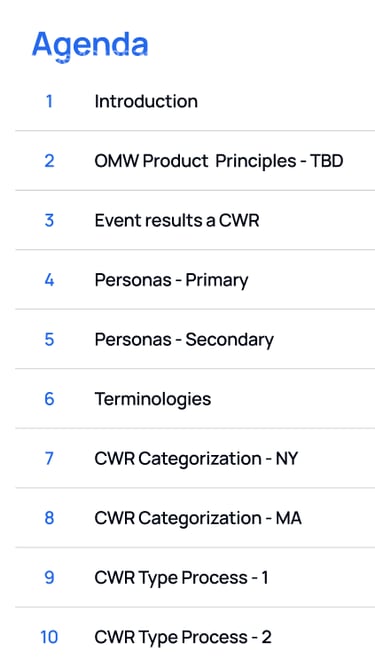
Synthesized data from the stakeholders about the existing internal process behind the scenes, What happens, When it happens, Who does what, and What technologies are involved? And timeline.
Synthesized data from the stakeholders about the existing internal process behind the scenes, What happens, When it happens, Who does what, and What technologies are involved? And timeline.
Synthesized data from the stakeholders about the existing internal process behind the scenes, What happens, When it happens, Who does what, and What technologies are involved? And timeline.
Synthesized data from the stakeholders about the existing internal process behind the scenes, What happens, When it happens, Who does what, and What technologies are involved? And timeline.